

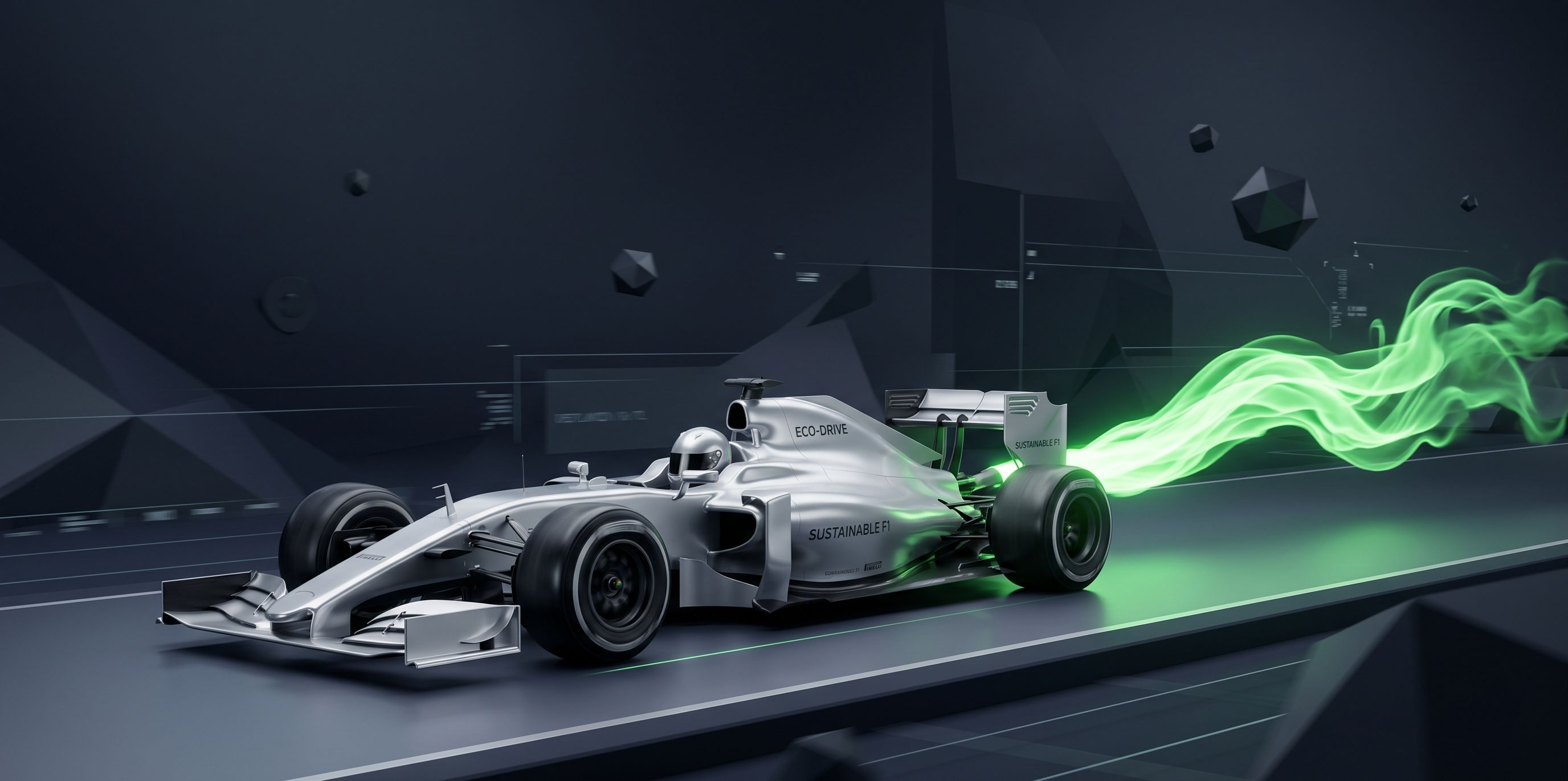
The 2026 regulations are the biggest reset to the F1 power unit since hybrids arrived in 2014. The basic architecture - a 1.6-litre V6 turbo plus electric motors - is unchanged. Almost everything around it isn’t. Here’s what the new rules actually do and why the field looks the way it does.
The power split is now (roughly) 50/50
Under the 2014–2025 rules, the internal combustion engine produced around 560–580 kW (~750–780 bhp) and the electric system added about 120 kW (~160 bhp) - an 80/20 split. The new rules cap the V6 at around 400 kW (~535 bhp) and triple the MGU-K to a maximum of 350 kW (~470 bhp). On full deployment, total power is similar - about 1,000 bhp - but it now comes roughly half from combustion and half from electrons.
The headline consequence is that battery management has gone from a secondary concern to a primary one. A driver who deploys the full 350 kW into every straight will run out of electrical energy long before a lap is done. The software story behind 2026 - when to harvest, when to deploy, how to recover energy in slow corners - is a much bigger fraction of car performance than it was in 2025.
The MGU-H is gone
The motor generator unit on the turbo (the MGU-H) has been deleted. It was the most technically sophisticated part of the old PU and the single biggest cost driver - and it was the main reason new manufacturers stayed away for a decade. Dropping it was a deliberate trade: less efficiency, lower cost, more manufacturers.
It worked. Audi is now on the grid as a fully badged manufacturer (the rebadged Sauber project finally arriving under its own name) and Cadillac joined as the eleventh team with a GM-built PU coming online from 2028.
100% sustainable fuel
Every car on the grid runs on a 100% sustainable, drop-in fuel - second- generation biofuels and synthetic e-fuels produced from carbon captured from the atmosphere or industrial waste streams. The chemistry is broadly similar to pump petrol; the regulation specifies the carbon source, not the molecular recipe. Power numbers from the new fuel are a fraction down on the 2025 spec, but the gap is much smaller than it was in pre-season testing.
This is the part of the 2026 rules with the longest tail. The same fuel specification is what manufacturers want to take to road cars. F1 is, for once, a development bench for something that genuinely scales.
Active aero, not DRS
The most visible change is the rear wing. DRS - the single hinged flap that opened in a designated zone - has been replaced by an active-aerodynamics package. Both the front and rear wings have movable elements. There are now two configured modes:
- Z-mode (high downforce) for cornering.
- X-mode (low drag) for straights.
Drivers switch modes themselves on the steering wheel; the car automatically reverts to Z-mode under braking. The “overtake button” - a brief manual boost of electrical power, replacing DRS’s role as an overtaking aid - gives a following car an energy advantage rather than an aero one. Whether that produces better racing than DRS is the live debate of the season.
The cars are smaller and lighter
The minimum weight has dropped from 798 kg in 2025 to 768 kg, with chassis dimensions also reduced - wheelbase down ~200 mm, width down 100 mm. The rationale is simple: F1 cars had gotten enormous, and the tighter dimensions should make following another car (and overtaking) easier on most modern circuits. The early evidence from Australia and China is that the cars do look more nimble in the corners, but slipstream effects in race trim still need a few more rounds of data.
What it all means on track
The four-race sample we have so far is too small to draw firm conclusions, but the pattern is clear: teams who got the energy-management software right out of the box (Mercedes, Ferrari) are running away from teams who didn’t (Red Bull, McLaren). The new entrants are exactly where you’d expect first-year programmes to be - Audi in the lower midfield, Cadillac yet to score.
If the second half of the season pulls the field together, 2026 will be remembered as the year F1 reset its technical platform without breaking the racing. If the gaps stay this big, the FIA will be writing a 2027 amendment by August.